5 Practical Sprint Planning Practices That Align Your Team and Move Work Forward
By The Quely Team — Quely editorial team
Sprint planning best practices can make the difference between productive development cycles and chaotic meetings that leave everyone confused. Many teams recognize the moment a sprint planning meeting is about to go sideways. It's that moment when the product manager starts with "So, we have a lot to cover today..." and you can see the developer's eyes glaze over. The designer starts checking Slack. The engineering manager quietly opens their calendar to see what meetings they're about to miss.
Sound familiar? If you've ever left a sprint planning session feeling more confused than when you walked in, you're not alone. Teams can spend hours in a room and still walk away with different understandings of what they are supposed to build.
The thing is, sprint planning doesn't have to be painful. The five practices below turn the purpose of Sprint Planning into concrete steps a team can test in its next planning session. The official Scrum Guide defines Sprint Planning around why the Sprint is valuable, what can be done, and how the work will get done; these recommendations help teams answer those questions with shared context.
Rather than stopping at generic advice, the article uses one illustrative team to show how the practices work together.
Meet the TeammateSync Team
Consider an illustrative team that combines several common sprint planning problems. TeammateSync is building collaboration software for distributed teams, the kind of B2B SaaS product that requires tight coordination between product, design, and engineering.
There's Sarah, the product manager who always has "just one more thing" to squeeze into the sprint. Dev, a senior developer who's increasingly frustrated with scope creep and unclear requirements. Maya, the designer who constantly struggles with handoff timing and dependencies. And Jordan, the engineering manager trying to keep everyone aligned while protecting the team from overcommitment.
Their sprint planning meetings were a disaster. Three-hour sessions that somehow ended with everyone confused about priorities. Mid-sprint surprises that derailed carefully laid plans. Missed deadlines that frustrated stakeholders and demoralized the team.
TeammateSync is an illustrative case study built from recurring planning problems: unclear goals, late story preparation, hidden dependencies, overcommitment, and weak follow-through.
Best Practice #1: Start Sprint Planning With Clear Goals, Not Task Lists
Why Sprint Goals Are More Effective Than Task Lists
Sarah used to start every planning meeting the same way: "Okay, we need to fix the onboarding flow, improve the dashboard performance, add that Salesforce integration, and maybe squeeze in some technical debt work if we have time."
Sound overwhelming? That's because it was. Sarah was essentially throwing a laundry list at the team without any context about why these things mattered or how they connected to broader goals.
The problem with the laundry list approach is that it treats all work as equally important. When everything is a priority, nothing is. The team ends up ping-ponging between tasks without understanding the bigger picture they're trying to achieve.
How to Write a Sprint Goal That Aligns Your Team
Here's what changed everything for TeammateSync: Sarah started leading with the "why" before diving into the "what."
Instead of listing features, she began each planning session with a clear sprint goal that connected directly to user outcomes. For example: "This sprint, we're focused on reducing time-to-first-value for new users because our onboarding drop-off rate is killing our growth."
Suddenly, every conversation became more focused. When Dev questioned whether the Salesforce integration was really necessary this sprint, Sarah could evaluate it against the stated goal. When Maya suggested a design improvement that wasn't directly related to onboarding, they could table it for the next sprint without hurt feelings.
Here's your practical takeaway: Before your next sprint planning meeting, write a one-sentence sprint goal that explains what you're trying to achieve and why it matters to users. Test it with this simple question: "If we only accomplished this one thing this sprint, would it move the needle on something that matters?"
If you can't answer that clearly, you're not ready to start planning tasks.
The beauty of this approach is that it creates natural alignment. When everyone understands the “why,” they can make better decisions about the “what” throughout the sprint. In Quely, objectives can remain connected to Work Units and Context Units while Orbit surfaces unanswered questions, risks, dependencies, blockers, and assumptions as Signals.
Sprint success isn’t defined by velocity alone. Learn alternative ways to measure and communicate your team productivity.
Best Practice #2: Effective Sprint Planning Requires 48-Hour Preparation
Why Last-Minute Planning Destroys Team Efficiency
Dev's biggest frustration wasn't the long meetings. It was the surprises. Stories would show up in planning that he'd never seen before. Requirements that seemed clear in the moment would reveal gaps once he started coding. Acceptance criteria that looked straightforward would turn out to be incomplete or contradictory.
They'd spend half the meeting just trying to understand what they were actually supposed to build. It felt like they were making up the project as they went along.
This is where most teams get agile sprint planning wrong. They treat the planning meeting as the moment when they figure out what to build, instead of the moment when they commit to work that's already been thoughtfully prepared.
The 48-Hour Rule for Sprint Story Readiness
The 48-hour rule changed everything for TeammateSync. Sarah committed to having all sprint stories ready and reviewed 48 hours before the sprint planning meeting. Not just written, actually ready, with complete acceptance criteria, designs attached, and any technical questions already discussed with the team.
Here's what "ready" actually means:
Acceptance criteria that define done, not just what to build
Dependencies identified and either resolved or explicitly called out
Design mockups or wireframes attached where relevant
Any technical unknowns flagged for discussion
Context about why this work matters to users
When Dev started seeing stories two days before planning, everything changed. He could review them async, ask clarifying questions, and come to the meeting with a realistic sense of the work involved. Maya could identify design dependencies early. Jordan could spot potential blockers before they derail the sprint.
Your practical takeaway: Institute a 48-hour rule for your team. No story goes into sprint planning unless it's been ready and reviewable for at least two days. This isn't about being rigid. It's about respecting everyone's time and setting the sprint up for success.
The difference this makes is remarkable. When your sprint planning meeting becomes about commitment and estimation rather than requirements gathering, you'll find that 90-minute sessions accomplish more than the three-hour meetings.
This is the kind of problem connected context solves. A Quely Space organizes related Work Units and synthesized Context Units so the reasoning behind a story does not disappear into an unrelated chat thread.
Best Practice #3: Scrum Sprint Planning Needs Honest Conversations about Capacity
Why Teams Overcommit and How to Fix It
Jordan's least favorite moment in every sprint planning meeting was when Sarah would look at the remaining time and say, "We can probably squeeze that in, right?"
They'd estimate stories conservatively, then gradually add more work until the sprint felt uncomfortably packed. When something inevitably took longer than expected, they'd end up working weekends or carrying work over to the next sprint.
The problem with optimistic capacity planning is that it assumes everything will go perfectly. No bugs will be discovered. No requirements will need clarification. No dependencies will cause delays. No one will get sick or take time off.
In reality, something always comes up during any sprint.
A Team-Calibrated Capacity Reserve
TeammateSync began reserving part of its theoretical capacity for unplanned work. In this example, the team starts with a 70/30 split, then recalibrates it using actual interruptions and spillover. The percentage is illustrative, not an industry standard.
The reserve is not idle time. It absorbs production issues, clarification, deployment work, and other recurring uncertainty. A team with different historical patterns should choose a different starting reserve.
Here's the capacity conversation framework that worked for them:
Calculate theoretical capacity (team size × sprint length - planned time off)
Choose an initial planned-work share from historical delivery and interruption data
Reserve the remainder for the categories of unplanned work the team actually experiences
Track what actually happens to refine your estimates
The magic happens when you start tracking how that buffer time gets used. TeammateSync discovered that their "unexpected" work was actually quite predictable—customer support issues, technical debt that couldn't wait, stakeholder requests that came in mid-sprint.
Practical takeaway: Start with a visible reserve, measure how it is used, and adjust it after each sprint. Consistency comes from calibration, not from copying a universal percentage.
When proposed work is reviewed alongside actual commitments and constraints, trade-offs become easier to explain. Quely’s Ownership view brings responsibility, workload, current commitments, and available capacity into the same execution context before the team commits.
Best Practice #4: Sprint Planning Meeting Success Requires Visible Dependencies
How Hidden Dependencies Kill Sprint Success
Maya's designs were often the invisible bottleneck that no one saw coming. Dev would start working on a feature, realize he needed clarification on the interaction design, and then wait for Maya to finish the current project. Meanwhile, Maya was blocked waiting for API specifications that were still being finalized.
These hidden dependencies were sprint-killers. Work that looked straightforward during planning would grind to a halt when the interconnections became clear.
The 5-Minute Dependency Mapping Process
The dependency mapping exercise changed everything. Before each sprint planning session, TeammateSync started with five minutes of dependency identification. They'd go through each potential story and ask: "What do we need from other people to complete this work?"
The answers were often eye-opening:
"We need final copy from marketing for the onboarding flow"
"The login integration depends on the security review being completed"
"Maya needs the API documentation before she can design the data visualization"
"We're waiting for legal approval on the terms of service update"
Here's their dependency identification process:
Go through each story individually and ask what you need from others
Identify both hard blockers (can't proceed without this) and soft dependencies (would be helpful to have)
Check the status of each dependency—is it already in progress, scheduled, or not yet started?
Create explicit handoff points with clear timelines
Have backup plans for when dependencies don't come through on time
The team started using a simple notation system: 🔴 for hard blockers, 🟡 for soft dependencies, and ✅ for dependencies that were already resolved.
Your practical takeaway: Add dependency mapping to your sprint planning routine. Spend five minutes per story asking "What do we need from others?" and "When do we need it?" You'll be amazed at how many potential blockers you catch before they become problems.
Maya particularly appreciated this change because it gave her visibility into when her work was needed and by whom. Instead of scrambling to deliver designs at the last minute, she could plan her work around the team's actual needs.
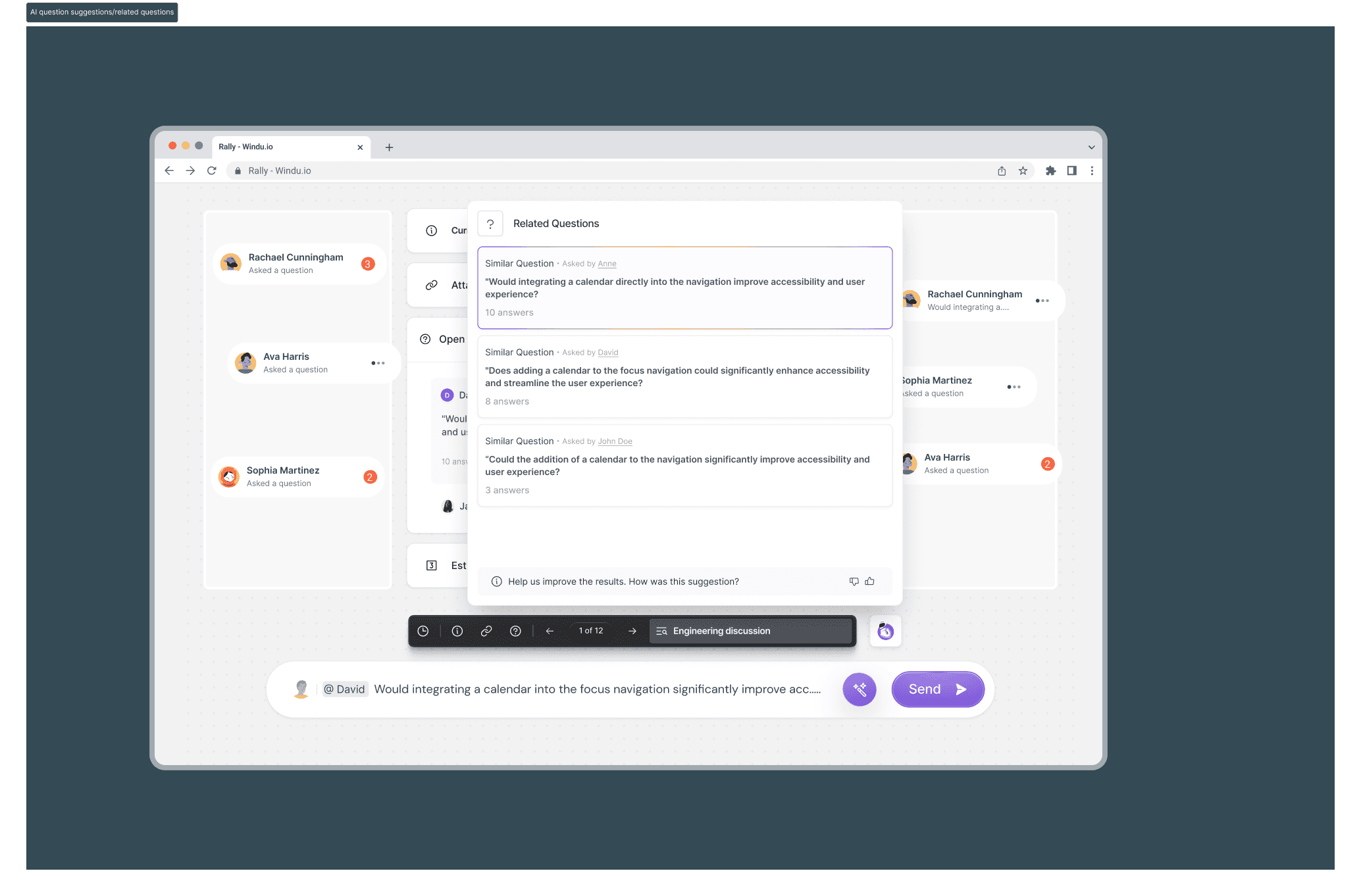
This is where Orbit helps. It reasons across connected Work Units and Context Units and can surface dependencies, blockers, assumptions, risks, and unanswered questions as Signals.
Best Practice #5: Agile Sprint Planning Must End With Clear Commitments
Why Most Teams Leave Planning Meetings Confused
The worst part of TeammateSync's old planning meetings wasn't the length. It was walking out with everyone having different understandings of what they'd just agreed to.
Sarah thought they'd committed to the full onboarding redesign. Dev thought they were just doing the happy path. Maya assumed the visual design was finalized. Jordan wasn't sure if the performance improvements were in scope or not.
This is the most overlooked part of agile sprint planning: the wrap-up. Most teams spend hours discussing and estimating work, then end the meeting without explicitly confirming what they've actually committed to.
The 5-Minute Sprint Commitment Protocol
TeammateSync instituted a five-minute alignment check at the end of every sprint planning meeting. It's not complicated, but it's transformational:
The 5-minute sprint planning wrap-up:
Restate the sprint goal in one sentence
List the committed stories by name (not just story points)
Confirm key dependencies and handoff dates
Identify the first thing each person will work on
Schedule any follow-up conversations that need to happen
Jordan facilitates this wrap-up by going around the room: "Sarah, what's your understanding of what we committed to? Dev, what are you starting on Monday? Maya, what do you need from others this sprint?"
It takes five minutes, but it prevents hours of confusion later. When someone says "I thought we agreed to include the mobile view," you can refer back to the explicit commitments made during the wrap-up.
Your practical takeaway: Don't end your next sprint planning meeting until everyone can clearly state what the team committed to. If there's any ambiguity, spend the extra few minutes to clarify it now rather than discovering the misalignment three days into the sprint.
The team also started documenting their sprint commitments in a shared location where everyone could reference them throughout the sprint. This creates clarity.
Shared visibility into commitments keeps everyone aligned throughout the sprint. Context Units and Signals keep decisions, assumptions, risks, and commitments connected to the work so teams can recover the reasoning when scope or priorities change.
How to Structure Your Sprint Planning to Avoid Chaos
A common complaint about sprint planning meetings is that they devolve into chaotic discussions with no clear structure. Teams jump between stories, rehash the same debates, and leave without clear commitments.
Here's a simple structure that prevents chaos and keeps things efficient:
Pre-meeting preparation (48 hours before):
Review and groom backlog items with complete acceptance criteria
Prioritize using objective business value vs. effort scoring
Identify any dependencies or blockers
Share stories with the team for async review and initial questions
Meeting agenda (90 minutes maximum):
Minutes 0-10: Review sprint goal and success metrics
Minutes 10-60: Go through prioritized stories (estimation and commitment)
Minutes 60-80: Capacity check and dependency mapping
Minutes 80-90: Commitment confirmation and next steps
Prioritization framework that works for everyone: Use objective scoring instead of subjective debates. Rate each story 1-5 on business impact, then have the team rate technical effort 1-5. Stories with high impact and reasonable effort get priority. This eliminates the "everything is urgent" problem that derails planning sessions.
When teams gather context in a Quely Space before the meeting, much of the discovery can happen asynchronously. Orbit surfaces open Signals, leaving the live session for trade-offs and commitments that genuinely require discussion.
The Transformation: How TeammateSync Fixed Their Planning
Six months after implementing these sprint planning best practices, TeammateSync's approach looked completely different. Their meetings went from three hours to 90 minutes. Mid-sprint surprises became rare. The team consistently delivered what they committed to, which improved stakeholder trust and team morale.
The transformation didn't happen overnight, and it required everyone to change their habits. But the impact was undeniable: better planning led to better execution, which led to better outcomes for users.
Having the right visibility tools made all of these practices easier to implement and sustain. When everyone can see objectives, dependencies, and commitments in real time, it becomes much simpler to stay aligned throughout the sprint.
Sprint Planning Best Practices: Frequently Asked Questions
1. What is the purpose of sprint planning?: Sprint planning aligns your team on what work will be completed during the upcoming sprint and why that work matters. The primary purpose is to create shared understanding between product, design, and engineering about sprint goals, story requirements, and team capacity.
2. How can you improve sprint planning meetings?: You can improve your sprint planning meetings by implementing proper preparation (48-hour rule), setting clear sprint goals before discussing tasks, having honest capacity conversations, mapping dependencies upfront, and ending with explicit commitment confirmation.
3. What are common sprint planning mistakes?: The most common agile sprint planning mistakes include: starting without clear goals, bringing unprepared stories to the meeting, overcommitting based on optimistic estimates, ignoring dependencies until they become blockers, and ending meetings without confirming what the team actually committed to.
4. How long should a sprint planning meeting last?: Effective sprint planning meetings should last no more than 90 minutes for a two-week sprint. If your meetings regularly exceed this timeframe, it usually indicates insufficient preparation or lack of meeting structure rather than complex work.
5. How do you prioritize work during sprint planning?: Use objective scoring methods like rating business impact (1-5) and technical effort (1-5), then prioritize high-impact, reasonable-effort items first. This prevents subjective "everything is urgent" debates and creates alignment between product and engineering on what matters most.
Your Next Sprint Planning Meeting
The next time you're sitting in a sprint planning meeting that's dragging on, remember that the goal isn't to fill the time—it's to create clarity and alignment that enables great work.
These sprint planning practices are not universal rules. They address common sources of sprint planning dysfunction: unclear objectives, insufficient preparation, unrealistic expectations, hidden dependencies, and misaligned commitments.
Start with just one. Pick the practice that resonates most with your team's current pain points and try it in your next planning session. Maybe it's the sprint goal clarity, or the 48-hour preparation rule, or the dependency mapping exercise.
Don't try to transform everything at once, that's a recipe for abandoning the changes when things get busy. Instead, build new habits gradually, proving to your team that better planning actually does lead to better execution.
The teams that get sprint planning right don't just deliver more predictably. They work with less stress, communicate more effectively, and build better products. That's worth the effort to get it right.
If you need a system to support these practices, Quely connects work with synthesized context, uses Orbit and Signals to expose delivery concerns, and uses Ownership to make commitments and workload visible. Regardless of the tool, the quality of the planning practice still matters most.
Your team deserves better than marathon planning sessions that leave everyone confused. These five practices can help you get there.